Sound as Symbol in Jesus’s Burial
BWV 245.38 “Darnach bat Pilatum Joseph von Arimathia”
Movement 38, “Darnach bat Pilatum Joseph von Arimathia,” brings the narrative of the St. John Passion to its final moment of action. Drawing from John 19:38–42, the Evangelist recounts how Joseph of Arimathea petitions Pilate for permission to remove Jesus’s body. Together with Nicodemus, he takes the body down, prepares it with linen cloths and spices, and lays it in a nearby tomb. The drama has quieted, but the weight of what has just occurred remains.
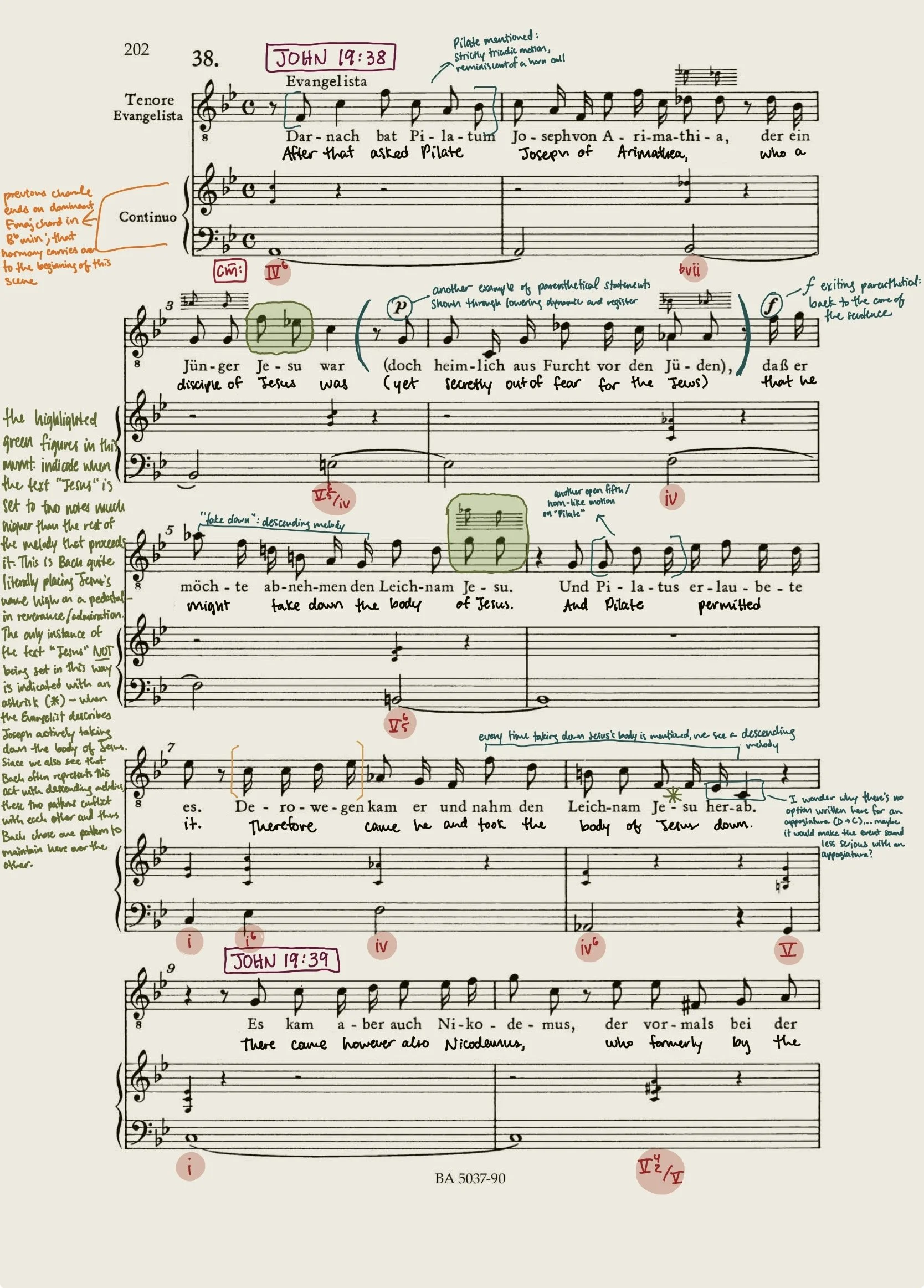
Like the preceding recitative, this movement opens in B-flat minor—the deepest flat key in the Passion. This is no coincidence. As explored in Movement 36, this tonal area carries symbolic weight, representing the realm of flesh, death, and human frailty. By returning to B-flat minor at the outset, Bach situates the listener firmly within that world. The crucifixion has already taken place; what remains is its aftermath.
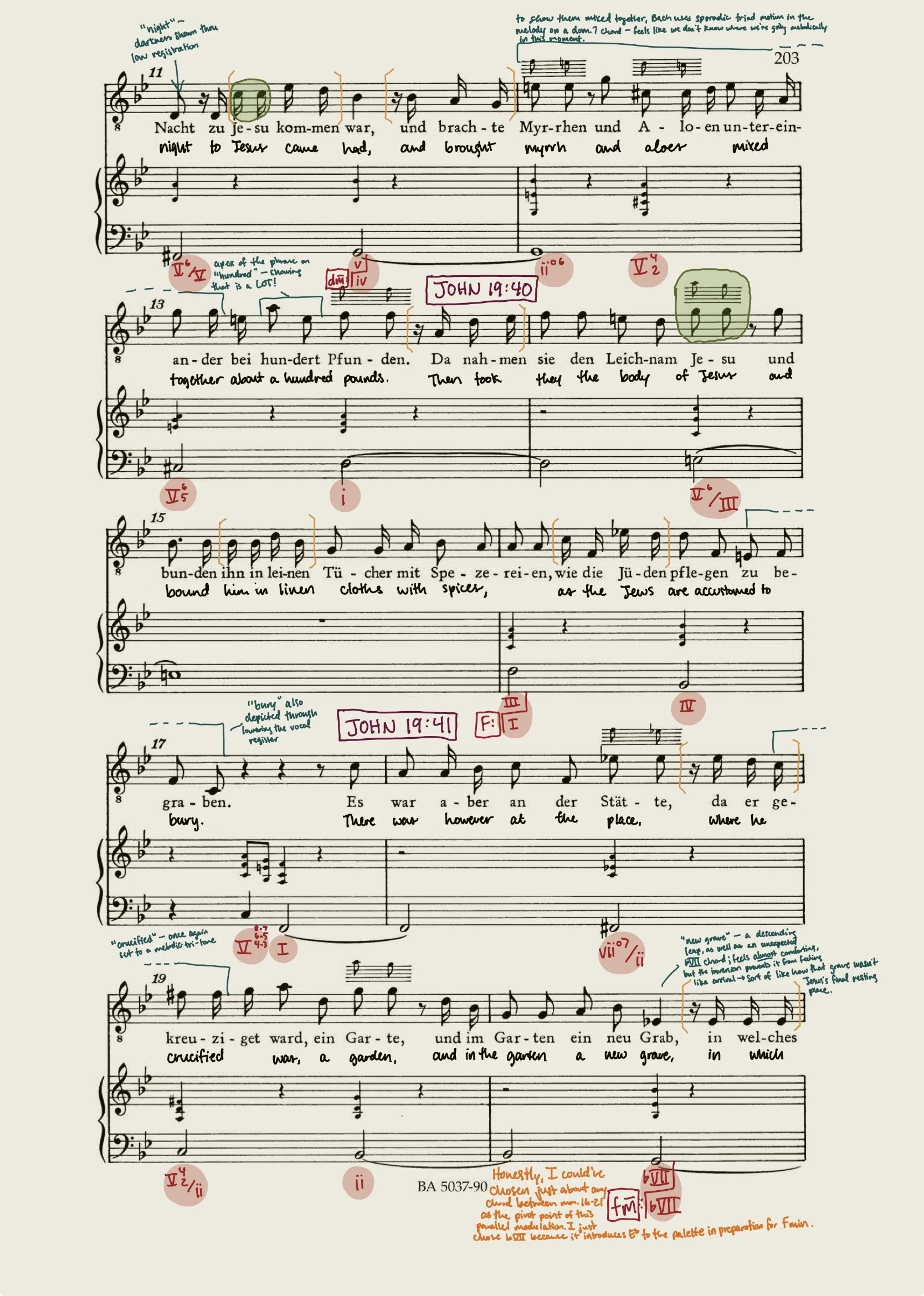
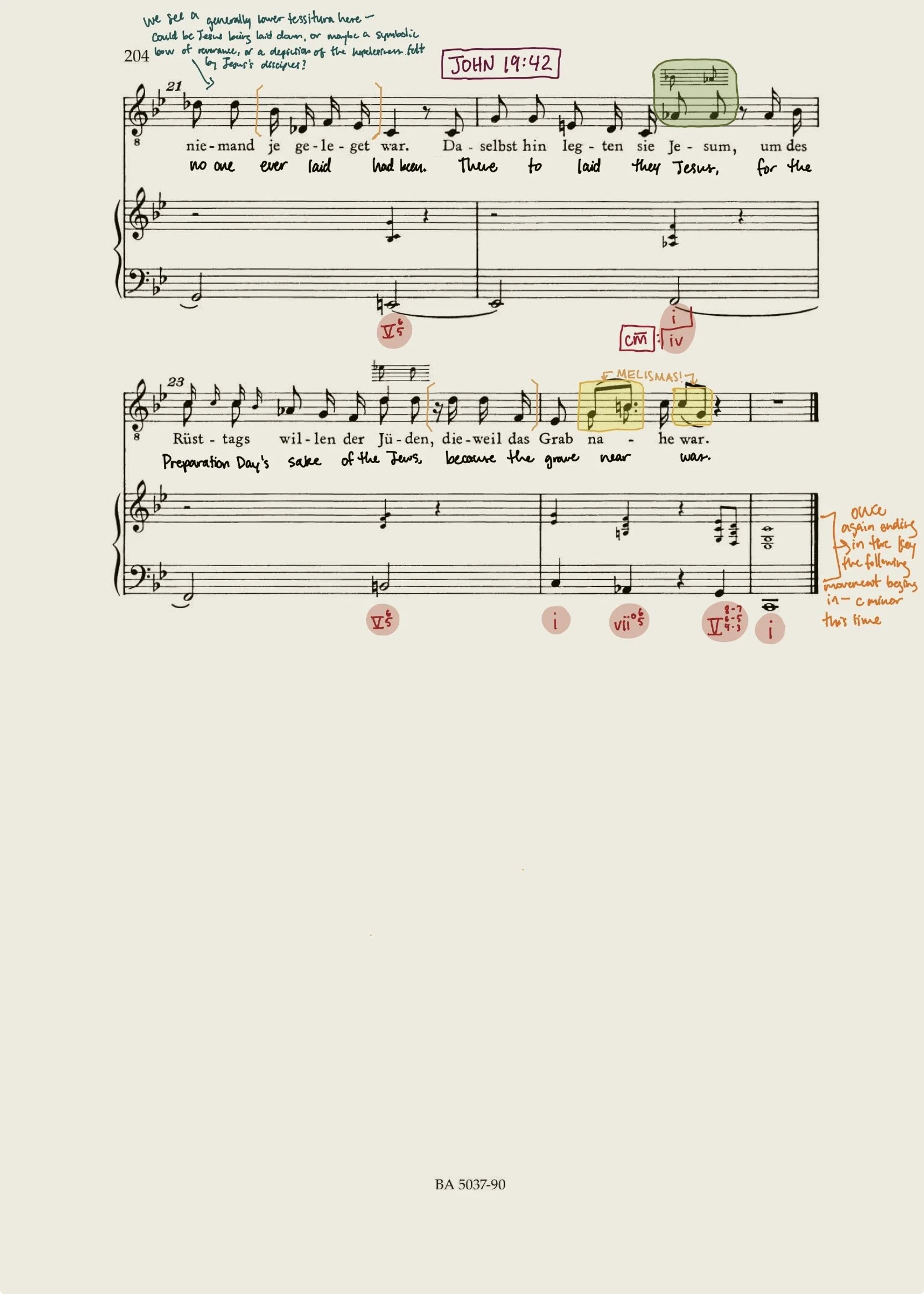
Very quickly, however, the recitative shifts its tonal center. After the opening measures, the music settles into C minor and begins a gradual harmonic journey through closely related flat-side keys: D minor, F major, and F minor, before ultimately returning to C minor at the close. This progression through flat-side keys is not just structural—it mirrors the focus on the physical body of Jesus, grounding the scene in the realities of death and burial. The narrative has moved from the moment of death to the handling of the body, and Bach’s tonal language reflects that shift. The music remains grounded, never venturing toward the “sharp” side of the tonal spectrum, and thus never leaving the symbolic domain of the flesh.
Within this tonal framework, Bach continues to employ melodic symbolism with precision. One of the most noticeable patterns occurs in his treatment of the name “Jesus.” Throughout the recitative, each mention of the name is set higher than the surrounding melodic material, typically approached by ascending leap. The effect is unmistakable: the name is elevated, placed above the musical surface, set apart from the narrative flow. Even in death, Jesus is distinguished.
There is, however, a single exception. In m. 8, as the Evangelist describes the body being taken down from the cross, the name “Jesus” does not follow this pattern. Instead, it is embedded within a descending gesture, aligning with the broader melodic depiction of the act itself. Throughout this movement, downward motion is consistently associated with the physical act of lowering the body. Here, the symbolic elevation of the name yields to the reality of the moment. The result is a brief but powerful conflict between two musical ideas: elevation and descent, divinity and mortality.
Other instances of melodic symbolism reinforce this layered approach. The name “Pilatus” is consistently set using perfect fifths or triadic outlines, recalling the character of a horn call. This gesture, already encountered in Movement 36 with “Kriegsknechte,” again serves to mark authority and presence. Pilate’s role in the narrative is not large at this point, but it remains decisive, and Bach’s musical treatment reflects that.
At the close of the recitative, Bach turns to a more subtle but equally meaningful device: melisma. As Paul Steinitz notes:
“Melismas are always used for special words or special places, and Bach writes two into the last phrase so as to make a convincing end to the narration.” (64)
These final melismas do more than decorate the line—they signal closure. After the sparse, speech-like delivery that characterizes most of the recitative, their presence marks the end of the Evangelist’s narrative role. The story has been told.
Taken together, these tonal and melodic details reveal a consistent approach to recitative writing across the St. John Passion. Bach treats the recitative not as a neutral vehicle for text, but as a space for interpretation. Tonality, melodic contour, and gesture all contribute to a deeper layer of meaning, one that aligns closely with the theological framework described by Eric Thomas Chafe as tonal allegory.
In this final recitative, that framework reaches a point of quiet resolution. The music does not transcend the realm of flesh—it remains within it, grounded in flat keys and physical imagery. And yet, through subtle acts of elevation and emphasis, Bach continues to point beyond the immediate scene, suggesting a significance that extends beyond what is seen.
The annotated score here highlights these moments in detail, tracing how Bach shapes the narrative through both tonal and melodic means.